This past week, I had the chance to volunteer at the Smithsonian’s American History Museum during their civic season exhibit, which consisted of a giant wall of postcards where museum-goers captured their answers to one deceptively simple question: What do you wish for America’s future? These postcards are going into a time capsule that will be opened in 2075, fifty years from now. In 2075, we will be just one year away from celebrating America’s 300-year anniversary.
The public reaction to this invitation was mixed. While some people’s eyes lit up with excitement as I encouraged them to fill out a postcard, just as many, if not more, people shook their heads and said, “I can’t even think that far.” Or, “I have no clue what I’d hope for.” Or even more honest, “it’s hard to feel hopeful about America’s future at all right now.” When given space to be curious, imagine, and feel a sense of hopeful wonder about our collective future, many people didn’t even know where to start. Some joyful wishes were coupled with many hesitations, dark jokes, and down-right refusals.
These moments emerged for me as a web of intersecting questions, all rooted in one central inquiry: What happens when people stop believing they have a future worth imagining?
Cultural Diagnosis: The Digital Mood & Disconnection
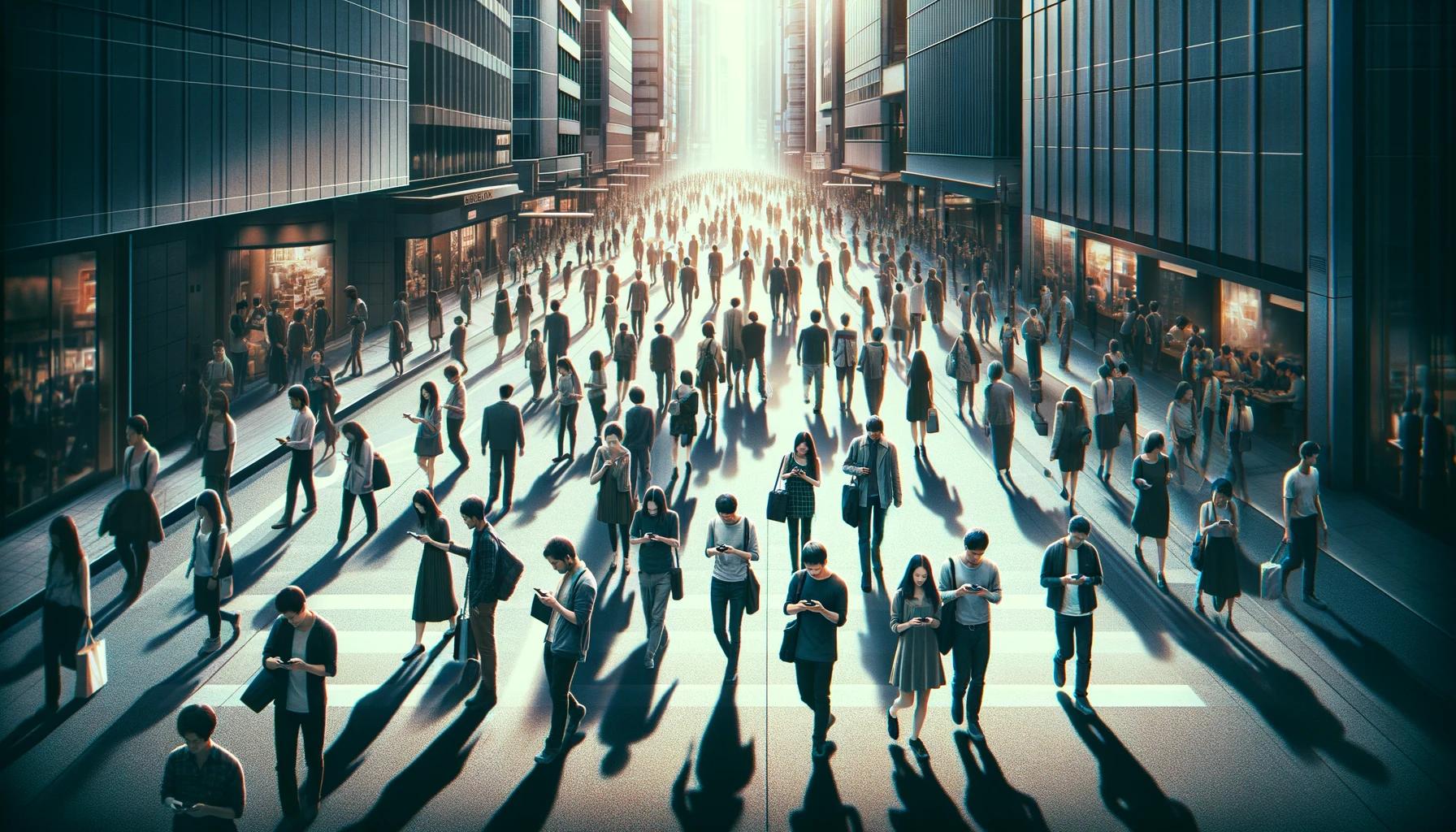
If there is anything that young people have fluency in that prior generations may not, it’s dark humor and meme culture. Having grown up in the digital world, it’s no wonder that in the last decade, as the world has rapidly taken on social and political changes, Gen Z’s muscle for holding suffering and satire at the same time has grown strong and expressed itself in the online landscape. The question is more so whether that indicates our resilience or simply our coping? In the last two months alone, we’ve seen content that jokes about World War 3, hunger game analogies, and travel fantasies (are we fantasizing… or escaping?). Young people today are not foreigners to the “digital mood swing” of holding multiple truths: war simultaneously existing alongside memes and summer selfies.
If an objective outsider were to look at the digital landscape and evaluate whether our generation “was ok,” I fear they’d likely say signs point toward no. And that was exactly my reaction when I overheard a pre-teen joke with her friends at that wish wall, saying “I hope there’s a big enough bomb, so that we all go at once.”
The 21st century is marked by extreme divisions and either-or binary frameworks that seem to lead our collective mindset toward a binary of its own: dystopia versus utopia. In a way, the wish wall experience proved to me that many Americans feel dystopia is easier to grasp, while utopia feels like a fantasy, a joke even, or something to put on a postcard and send away to be ignored since “we’re all going to be burned up by 2075 anyway.” When dystopia persists and utopia becomes unattainable, we are left feeling powerless, reactive, and have no motivation to feel engaged in (re)imagining our communities, connections, and care toward each other.
Introducing a Third Way: Protopia as the Next Wave of Possibility
We need something between despair and delusion. So let me introduce you to a new buzzword: Protopia. And I say buzzword because the term itself isn’t ultimately what matters; it’s the meaning behind it.
Protopia is the idea that we are building a world that is better than yesterday’s, but is not perfect. It makes space for multiple paths forward. Small steps. Incremental progress. Grounded in possibility and potential.
Coined by futurist Kevin Kelly, protopia is not the bridge between dystopia and utopia, but something else entirely. It doesn’t demand perfection nor accept horror. Instead, it creates space for slow, imperfect progress.
Still feels intangible? Fair enough. We don’t see this approach in our stories, so it might feel foreign or unhelpful at first. But here’s what I mean: protopian thinking makes space for the stories we tell ourselves. It allows for nuance and making meaning within progress, community, and change. Protopia makes space for resilience. Moving away from dystopia and utopia toward protopia changes how we think about tomorrow. Perfectionism stops us from imagining a different future than the doom we’re constantly fed.
Intergenerational and Historical Context
When we lack a connection to our community, we turn outward, searching for other ways to make sense of life — whether that’s manifestation or astrology or AI. Historically, where one might find this in religious contexts or across generations, we have lost spaces for intergenerational and inter-perspective dialogue. At the wish wall, I heard countless people say, “Well I won’t be here, so my wish won’t matter” or “I won’t be able to do anything.” And this is the modern dilemma and crux we face as young people. The future requires investment within and across generations in building a future with our communities. Especially when older generations dismissed notions of a future beyond them, young people were accepting it. We’ve become a reactive culture, responding to crisis after crisis. But our history includes movements born from imagination and vision. We must move from a ‘what is’ mindset to one that poses a deceptively similar question: ‘what could be?’ The difference between those two questions is the difference between surviving and thriving.
Protopian Practice: What It Looks Like
Imagination is a muscle, not a luxury. It is built on the ancestral backs of people who had no other choice but to hope in order to survive. Lest us not forget.
How do we make this move from protopia as a conceptual idea into a practice in our everyday reality?
Everyday Practice:
On a personal level:
Media discernment: Notice how dystopian narratives shape your capacity for hope. We are inundated with stories that project a very narrow negative lens on our future, and our agency and possibility depend on seeing beyond the singular story of collapse that dominates our media consumption.
Digital Sabbath: Create space away from technology, echo chambers, and noise. The best ideas, moments, and stories come from being in communion with ourselves and each other.
On a community level
Intergenerational wisdom: What are we passing forward to the next generation? Stories of resilience, practices of connection, the ability to imagine better futures together.
Be the villager: To have a village, you need to be a villager. Create spaces for in-person community. Show up even when busyness culture has you tired. Choose connection with effort over convenience.
These, too, are just a small collection of imperfect steps.
What we need is not quick-fix optimism, but enduring relational repair. Protopia invites us into connection, repair, and realism with hope and possibility. It helps us move from reaction to orientation, from fear to experimentation, from collapse vs. perfection toward collective and continuous care. Where society seeks a suture for its issues, we need a balm.
This Is Not a Dream: It’s an Invitation
The time capsule of 2025 wishes begs individuals to consider this key question: what stories are we leaving behind for the future? But as a collective, as human communities, we are moved to consider an even more important set of questions: What do we need to remember? What do we need to reimagine? And how does that start in our very own communities?
It’s messy, but building community has always been an experiment. The future depends on our willingness to try — together. To imagine not just what could be, but to create the conditions where it becomes possible.